
Li Xiangming, Li Xiao, Zhu Kai, Li Zhaoyong, Yang Zaibin, Yang Weiren
Shandong Feed Quality Inspection Institute, Shandong Zhongcheng Feed Technology Co., Ltd
Shandong Agricultural University, SD BIOTECH GROUP
Abstract: In order to study the efficacy of Meifei 3 in improving pork production performance and nutrient utilization efficiency. This study selected 80 healthy ternary hybrid commercial pigs weighing around 70 kg and randomly divided them into 2 treatments, with 4 replicates per treatment and 10 pigs per replicate. Treatment 1: Control group, fed with basic diet for fattening pigs; Treatment 2: In the experimental group, 500 mg/kg of Meifei No. 3 was added to the control group's diet. The experimental period is 8 weeks. The results indicate that:
Production performance and meat production performance: Compared with the entire feeding period, the addition of 500 mg/kg Meifei No. 3 to the diet did not significantly change daily weight gain, end weight, and feed intake (p>0.05), nor did it significantly change the backfat thickness, body length, and eye muscle area at point P1 (p>0.05). However, there was a significant trend of reducing feed to weight ratio (p=0.059), which could significantly increase backfat thickness at point P2, backfat thickness at point P3, and average backfat thickness (p<0.05), and could significantly improve slaughter rate (p<0.01).
Fecal microbiota: Compared with the control group, the addition of 500 mg/kg Meifei No. 3 to the diet significantly increased the number of anaerobic lactic acid bacteria (p<0.01) and significantly reduced the number of Salmonella (p<0.01). there="" was="" no="" significant="" difference="" in="" the="" total="" number="" of="" bacteria="" and="" intestinal="" p="">0.05).
Serum antioxidant and immune function: Adding 500 mg/kg of Meifei 3 to the diet of fattening pigs did not improve the levels of MDA, GSH, and SOD; There was no improvement in the content of lgA and lgG immunoglobulin, but there was a significant increase in the content of lgM immunoglobulin (p<0.05).
Study on Trace Element Deposition: Adding 500 mg/kg Meifei 3 to the diet of fattening pigs did not improve the deposition of iron, copper, zinc, and selenium in the back muscles, hind leg meat, and liver (p>0.05), nor did it improve the deposition of manganese in the back muscles and hind leg meat (p>0.05). However, it significantly increased the deposition of manganese in the liver (p<0.05). There is no improvement in the reserve of VA, VD3, and VE in the back muscles, hind leg muscles, and liver.
Research on Back Muscle Color: After slaughtering back muscles at 4 ° C and storing them in air for 12 days, different meat color indicators showed different changes. Compared with the control group, the a value of the experimental group stored for 24 hours (1d) was significantly higher than that of the control group (p<0.01), and there was a significant difference in the a value of the experimental group stored for 72 hours (3d) (p<0.05). The L value, b value, and comprehensive score of the dorsal muscles stored at 4 ℃ with air for 24 hours (1d), 72 hours (3d), 144 hours (6d), 216 hours (9d), and 288 hours (12d) showed a linear and quadratic decrease pattern (p<0.01).
This proves that adding 500 mg/kg of Meifei No. 3 to fattening pigs can improve production and meat performance, enhance immunity, improve gut microbiota, increase liver trace element deposition, and enhance meat color, which is the basis for improving feed efficiency.
Keywords: Meifei 3, fattening pig, production performance, nutrient utilization rate, antioxidant, immunoglobulin, trace element and vitamin deposition, meat quality
1 Materials and Methods
1.1 Test Materials
Meifei No. 3: Enzymatic polysaccharide+Butyricinetobacter. Provided by SD BIOTECH GROUP.
Commercial pig feed: provided by Shandong Zhongcheng Feed Technology Co., Ltd.
1.2 Experimental animals and design
Select 80 healthy ternary hybrid commercial pigs weighing around 70 kg and randomly divide them into 2 treatments, with 4 replicates per treatment and 10 pigs per replicate. Control group, fed with basic diet for fattening pigs; The experimental group added 500 mg/kg of Meifei No. 3 to the control group's diet. The experimental period is 8 weeks. The detailed composition and nutritional levels of the diet are shown in Table 1.
1.3 Measurement indicators
Production performance: Weigh piglets at the beginning and end of the formal trial period in units of repetition, calculate daily weight gain of piglets, calculate daily feed intake of piglets, and calculate the average daily feed intake and feed to weight ratio of weaned piglets.
Diarrhea rate: Analyze the trend of changes in fecal softness and hardness index and diarrhea rate at different stages.
Nutrient utilization efficiency: From the 29th to the 35th day of the formal experiment (the 5th week of the formal experiment), digestion and metabolism experiments were conducted on each replicate of each treatment using the AIA indicator method. Collect continuously for 3 days and measure nutrient utilization efficiency (protein, amino acids, total energy apparent digestibility).
Fecal microbiota: On days 29-35 of the formal experiment, 6 pigs were selected for each treatment, and fecal samples were taken from the rectum before morning feeding to determine intestinal microbiota.
Serum biochemistry: At the end of the experimental period (slaughter), 6 pigs were selected for each treatment, blood was collected, serum was separated, and stored at -20 ℃ to determine serum biochemical indicators (serum metabolites and serum enzymes).
Blood antioxidant: At the end of the experimental period (slaughter), 6 pigs were selected for each treatment, blood was collected, serum was separated, and stored at -20 ℃ to determine antioxidant indicators (SOD, GSH-PX, MDA).
Immunoglobulin: At the end of the experimental period (slaughter), 6 pigs were selected from each treatment, blood was collected, serum was separated, and stored at -20 ℃ to determine immunoglobulin indicators (lgM, lgA, lgG).
Trace elements: At the end of the experimental period (slaughter), 6 pigs were selected for each treatment, and liver and pork samples were taken to determine trace elements (Zn, Cu, Fe, Mn, Se, etc.).
Vitamins: At the end of the experimental period (slaughter), 6 pigs were selected for each treatment, and liver and pork samples were taken to determine vitamins (A, D, and E).
Organ fluid antioxidant: At the end of the experimental period (slaughter), 6 pigs were selected from each treatment, and liver and pork samples were taken to measure antioxidant indicators (SOD, GSH-PX, MDA).
Drug residues: At the end of the experimental period (slaughter), 6 pigs were selected for each treatment, and liver and pork samples were taken to determine drug residues.
Meat quality: shear force (N), meat color value (L value, a value, b value), muscle pH, water loss rate (%), drip loss (%), cooking loss (%), etc.
Meat ingredients: conventional ingredients (dry matter, fat, protein, ash); cholesterol; Total amino acid composition of muscles;
Flavor compounds: Inosine acid (mg/g), cholesterol (mg/100g); Total collagen (mg/g), soluble collagen (mg/g), insoluble collagen (mg/g), and collagen solubility (%); The composition of all fatty acids in muscles, etc.
1.4 Data statistics and analysis
The data was analyzed using SAS 9.2 software, and Duncan's multiple range test was used to compare the mean values, with a significance level of P<0.05.
2 Results and Analysis
2.1 Comparative analysis of production performance
The effect of adding 500 mg/kg of Meifei No. 3 to the diet of fattening pigs on production performance is shown in Table 2 and Figure 1. Analysis of variance showed that adding Meifei 3 to the diet of fattening pigs had no effect on daily weight gain, final weight, and feed intake (p>0.05), but showed a trend of reducing feed to weight ratio (p=0.059). Numerical analysis: Taking the production performance indicators of the control group as 100%, the finishing weight of fattening pigs increased by 0.2%, daily weight gain increased by 1.2%, feed intake decreased by 1.6%, and feed to weight ratio decreased by 2.8%. This proves that adding 500 mg/kg Meifei 3 to the diet of fattening pigs may improve their production performance.
2.2 Comparative analysis of meat production performance
The effect of adding 500 mg/kg of Meifei 3 to the diet of fattening pigs on meat production performance is shown in Table 3 and Figure 2. The analysis of variance shows that adding Meifei 3 to the diet of fattening pigs has no effect on the backfat thickness and body length at point P1 (p>0.05), but can significantly increase the backfat thickness at point P2 (p<0.05), point P3 (p<0.05), and average backfat thickness (p<0.05), and significantly improve eye muscle area and slaughter rate (p<0.05). Numerical analysis: Taking the meat production performance indicators of the control group as 100%, the backfat thickness at P1, P2, P3, average backfat thickness, body length, eye muscle area, and slaughter rate increased by 4.1%, 41.5%, 39%, 21.4%, 1.1%, 4.2%, and 0.9%, respectively. This proves that adding 500 mg/kg Meifei 3 to the diet of fattening pigs can improve their meat production performance.
2.3 Comparative analysis of fecal microbiota
The effect of adding 500 mg/kg of Meifei 3 to the diet of fattening pigs on fecal microbiota is shown in Table 4 and Figure 3. Analysis of variance shows that adding Meifei 3 to the diet of fattening pigs has no effect on the total number of bacteria and intestinal bacteria (p>0.05), but significantly increases the number of anaerobic lactic acid bacteria (p<0.01) and significantly reduces the number of Salmonella (p<0.01). Numerical analysis: Taking the fecal microbiota indicators of the control group as 100%, the total number of bacteria, intestinal bacteria, and anaerobic lactic acid bacteria increased by 2.0%, 2.6%, and 4.8%, respectively, while the number of Salmonella decreased by 72.9%. This indicates that Meifei No. 3 can have the function of improving intestinal microbiota.
2.4 Comparative analysis of serum antioxidant properties
The effect of adding 500 mg/kg of Meifei 3 to the diet of fattening pigs on serum antioxidant performance is shown in Table 5 and Figure 4. Analysis of variance shows that adding Meifei 3 to the diet of fattening pigs has no effect on the content of MDA, GSH, and SOD (p>0.05); From a numerical perspective, with the control group's serum antioxidant indicators at 100%, the serum MDA content, GSH, and SOD activity were 98.7%, 103.0%, and 103.3%, respectively. This proves that Meifei No. 3 can improve antioxidant capacity through MDA content.
2.5 Serum immunoglobulin
The effect of adding 500 mg/kg of Meifei 3 to the diet of fattening pigs on serum immunoglobulin is shown in Table 6 and Figure 5. The analysis of variance shows that adding Meifei 3 to the diet of fattening pigs has no effect on the content of immunoglobulin lgA (p>0.05), but significantly increases the content of immunoglobulin lgG and lgM (p<0.05). Numerically speaking, with the control group's serum immune indicators at 100%, the content of immunoglobulin in lgA, lgG, and lgM was 99.7%, 106.6%, and 108.5%, respectively. This proves that Meifei No. 3 can increase the content of lgG and lgM and improve immunity.
2.6 Comparative analysis of trace element deposition
The effect of adding 500 mg/kg of Meifei No. 3 to the diet of fattening pigs on the deposition of trace elements in fattening pigs is shown in Table 7 and Figure 6, Figure 7 and Figure 8. The analysis of variance showed that it had no effect on the deposition of iron, copper, zinc, selenium and other elements in the back muscles, hind leg meat and liver, and had no effect on the deposition of manganese elements in the back muscles and hind leg meat (p>0.05), but significantly increased the deposition of manganese elements in the liver (p<0.05). Numerically speaking, with a control group trace element deposition rate of 100%, the deposition rates of iron, copper, zinc, and selenium in the dorsal muscles were 104.3%, 103.4%, 100.8%, and 100.4%, respectively; The deposition amounts of iron, manganese, copper, zinc, and selenium in the hind leg meat were 99.9%, 106.0%, 107.4%, 105.4%, and 100%, respectively; The deposition of iron, manganese, copper, zinc, and selenium in the liver is 107.6%, 109.3%, 99.5%, 109.6%, and 104.4%. This indicates that Meifei 3 has different deposition efficiencies for different tissues and elements, and overall can improve the deposition of muscle and liver.
2.7 Comparative analysis of vitamin reserves
The effect of adding 500 mg/kg Meifei No. 3 to the diet of fattening pigs on trace element deposition is shown in Table 8 and Figures 9, 10, and 11. The analysis of variance shows that there is no effect on the reserves of VA, VD3, and VE in the back muscle, hind leg meat, and liver (p>0.05). Numerical analysis: Taking the control group as 100%, fattening pigs fed with Meifei 3 had VA, VD3, and VE contents in their back muscles of 108.9%, 100.2%, and 110.1%, respectively; The contents of VA, VD3, and VE in hind leg meat are 102.8%, 109.1%, and 102.9%, respectively; The contents of VA, VD3, and VE in the liver were 112.2%, 104.1%, and 108.6%, respectively. This indicates that organic trace elements can improve the vitamin deposition in muscles and liver.
2.8 Comparison and analysis of meat color at different times of dorsal muscle storage (4 ℃, with air)
The effect of adding 500 mg/kg of Meifei No. 3 to the diet of fattening pigs on trace element deposition is shown in Tables 9, 10, and Figures 12, 13, 14, and 15. After slaughter at 4 ° C and storage in air for 12 days, different meat color indicators showed different changes. Compared with the control group, the meat color a value of the experimental group was significantly higher after 24 hours (1 day) of storage (p<0.01); After being stored for 72 hours (3 days), different meat color a values were observed (p<0.05); Taking the control group as 100%, after adding Meifei 3 to the diet, the comprehensive scores of meat color in the back muscles after storage for 1 day, 3 days, 6 days, 9 days, and 12 days were 112.5%, 104.2%, 111.3%, 101.7%, and 113.6%, respectively, indicating that Meifei 3 can maintain the meat color value during muscle storage.
The analysis of the changes in various indicators of back muscle color during 12 days of storage (4 ° C, with air) is shown in Table 11. The time variation changed the L value and comprehensive score value (p<0.001) of the control group, as well as the L value and comprehensive score value (p<0.01) and b value (p<0.05) of the Meifei 3 treatment group. With the prolongation of time, the L value and comprehensive score value of the control group and Meifei 3 treatment group showed linear (p<0.001) and quadratic variation patterns (p<0.001), and the b value of the Meifei 3 treatment group also showed linear (p<0.01) and quadratic variation patterns (p<0.01).
Linear regression analysis was conducted on the meat color L value and comprehensive score values that showed significant linear changes in both the experimental group and the control group. The results are shown in Table 12. With a slope value of 1 in the control group, after feeding the fattening pigs with Meifei No. 3, the relative slope value of the meat color L value was 1.11, and the relative slope value of the meat color comprehensive score was 1.10. A larger slope value indicates a more pronounced degree of temporal variation.
3 Conclusion
Compared with the control group, adding Meifei 3 to the diet of fattening pigs can significantly reduce the feed to weight ratio and improve production performance; It can significantly increase the backfat thickness at P2 point, P3 point, and average backfat thickness, significantly improve slaughter rate, and enhance meat production performance.
3.2 Adding Meifei No. 3 to fattening pigs significantly increases the number of anaerobic lactic acid bacteria, reduces the number of Salmonella, and improves the intestinal microbiota environment. It is possible to enhance immunity by increasing the content of lgM immunoglobulin.
3.3 Adding Meifei No. 3 to fattening pigs can improve the deposition efficiency of different tissues and elements, and overall can improve the element deposition in muscles and liver; Can improve the vitamin deposition in muscles and liver.
3.4 Adding Meifei No. 3 to fattening pigs significantly increased the redness value (a value) of the back muscles stored at 4 ℃ with air for 24 hours (1d) and 72 hours (3d), which can maintain the color value of the meat during muscle storage and improve the function of muscle color in fattening pigs.
Table 1 Experimental Diet Composition and Nutritional Level
Raw material name | Control group | Meifei No. 3 |
Corn | 63.00 | 63.00 |
Soybean meal 46 | 20.00 | 20.00 |
Bran | 10.02 | 10.02 |
Fermented material (converted by air drying) | 1.60 | 1.60 |
Calcium dihydrogen phosphate III | 1.20 | 1.20 |
Stone powder | 1.50 | 1.50 |
Sodium chloride | 0.45 | 0.45 |
Lysine 70% | 1.65 | 1.65 |
Methionine | 0.04 | 0.04 |
Threonine | 0.04 | 0.04 |
Premixed material,% | 0.50 | 0.50 |
Amount to | 100 | 100 |
Table 2 Production Plan of High Quality Pork without Resistance Feeding for 8 Weeks with Meifei No. 3- Production Performance Comparison
Initial weight, kg/head | End weight, kg/head | Daily weight gain,kg/d | Feed intake,g/d | F/G | |
Comparative analysis of production performance | |||||
Compare | 70.57 | 118.17 | 850.10 | 2837.87 | 3.34 |
Meifei No. 3 | 70.26 | 118.45 | 860.58 | 2791.35 | 3.24 |
SEM | 0.205 | 0.782 | 7.715 | 27.841 | 0.022 |
p-value | 0.434 | 0.841 | 0.513 | 0.423 | 0.059 |
Relative value of production performance,% (with control as 100%) | |||||
Compare | 100 | 100 | 100 | 100 | 100 |
Meifei No. 3 | 99.6 | 100.2 | 101.2 | 98.4 | 97.2 |
Table 3: Production Plan for High Quality Non Resistant Pork Fed with Meifei No. 3 for 8 Weeks - Comparative Analysis of Meat Production Performance
Meifei No. 3 | P1 point backfat thickness mm | P2 point backfat thickness mm | P3 point backfat thickness mm | Average backfat thickness mm | Length cm | Eye muscle area cm2 | Dressing percentage % |
Comparative analysis of meat production performance | |||||||
Compare | 49.00 | 20.50 | 25.00 | 31.50 | 105.13 | 58.64 | 76.18 |
Meifei No. 3 | 51.00 | 29.00 | 34.75 | 38.25 | 106.25 | 61.08 | 76.88 |
SEM | 0.612 | 1.503 | 1.780 | 1.127 | 0.871 | 0.718 | 0.088 |
p-value | 0.125 | 0.013 | 0.016 | 0.010 | 0.529 | 0.010 | 0.001 |
Relative value of meat production performance,% (with control as 100%) | |||||||
Compare | 100 | 100 | 100 | 100 | 100 | 100 | 100 |
Meifei No. 3 | 104.1 | 141.5 | 139.0 | 121.4 | 101.1 | 104.2 | 100.9 |
Table 4: Production Plan for Anti Antibiotic High Quality Pork with Meifei No.3 Feeding for 8 Weeks - Comparative Analysis of Fecal Microorganisms
Meifei No. 3,500 mg/kg | Total bacterial count | Intestinal bacteria | Anaerobic lactic acid bacteria | Salmonella |
Comparative analysis of fecal microbiota | ||||
Compare | 9.00 | 6.63 | 8.51 | 3.25 |
Meifei No. 3 | 9.18 | 6.80 | 8.92 | 0.91 |
SEM | 0.066 | 0.143 | 0.067 | 0.377 |
p-value | 0.199 | 0.548 | 0.006 | 0.005 |
Relative value of fecal microbiota,% (with control as 100%) | ||||
Compare | 100 | 100 | 100 | 100 |
Meifei No. 3 | 102.0 | 102.6 | 104.8 | 28.1 |
Table 5: Production Plan for High Quality Pork without Resistance Fed with Meifei No.3 for 8 Weeks - Comparative Analysis of Serum Antioxidants
Meifei No. 3,500 mg/kg | MDA content,nmol/ml | GSH,μmol/L | SOD,U/mL |
Comparative analysis of serum antioxidant activity | |||
Compare | 4.28 | 1256.40 | 256.61 |
Meifei No. 3 | 4.23 | 1293.60 | 265.09 |
SEM | 0.284 | 41.710 | 4.076 |
p-value | 0.921 | 0.662 | 0.316 |
Relative value of serum antioxidant,% (with control as 100%) | |||
Compare | 100 | 100 | 100 |
Meifei No. 3 | 98.7 | 103.0 | 103.3 |
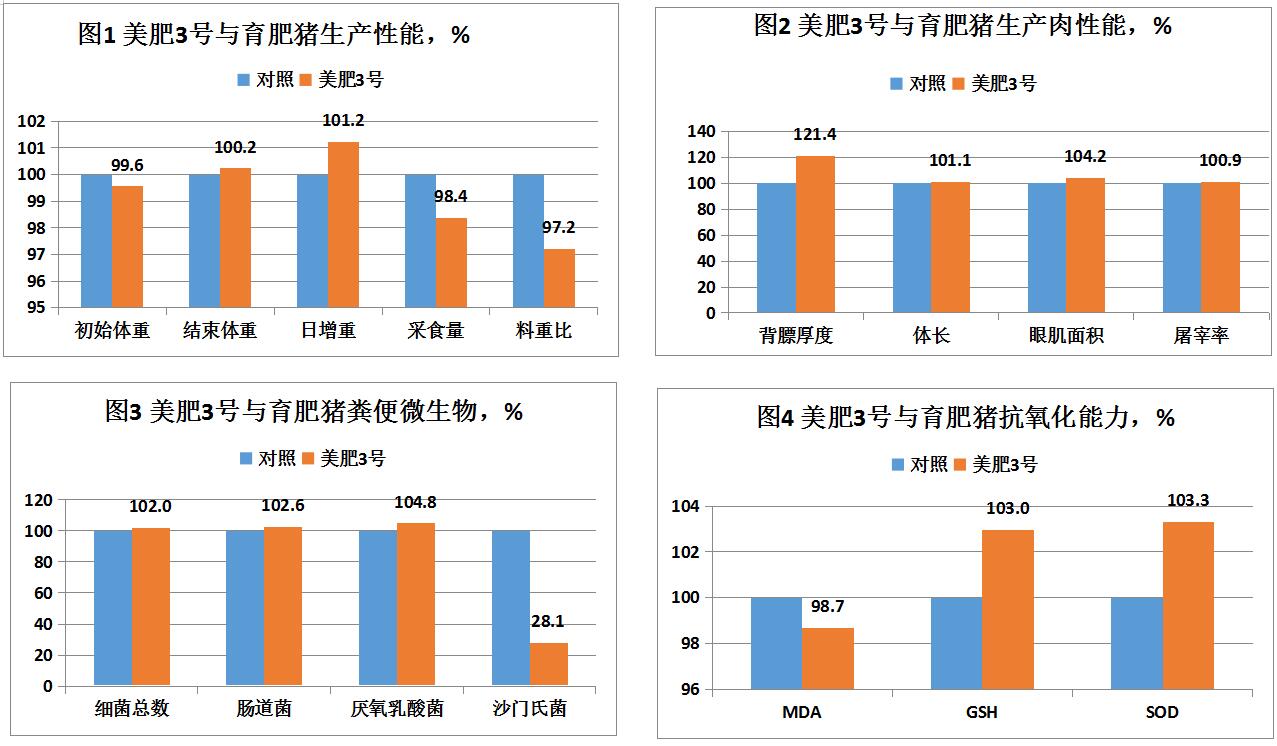
Table 6: Production Plan for High Quality Pork without Antibody after 8 Weeks of Feeding with Meifei No. 3- Comparative Analysis of Serum Immune Antibodies
Meifei No. 3,500 mg/kg | IgA | IgG | IgM |
Comparative analysis of immunoglobulin | |||
Compare | 38.22 | 296.16 | 39.48 |
Meifei No. 3 | 38.10 | 315.85 | 42.85 |
SEM | 0.783 | 8.117 | 0.716 |
p-value | 0.937 | 0.025 | 0.034 |
Relative value of immunoglobulin,% (with control as 100%) | |||
Compare | 100 | 100 | 100 |
Meifei No. 3 | 99.7 | 106.6 | 108.5 |
Table 7 Production Plan of High Quality Pork without Resistance Feeding for 8 Weeks with Meifei No. 3- Comparative Analysis of Trace Element Deposition in Muscle
Organization | Meifei No. 3,500 mg/kg | Fe | Mn | Cu | Zn | Xi |
Comparative analysis of trace element deposition | ||||||
Back muscles | Compare | 5.49 | - | 0.30 | 6.58 | 0.13 |
Meifei No. 3 | 5.72 | - | 0.31 | 6.64 | 0.13 | |
SEM | 0.137 | 0.023 | 0.154 | 0.004 | ||
p-value | 0.406 | 0.885 | 0.866 | 0.948 | ||
Hindquarter | Compare | 13.52 | 0.14 | 0.19 | 20.63 | 1.04 |
Meifei No. 3 | 13.51 | 0.15 | 0.21 | 21.75 | 1.04 | |
SEM | 1.075 | 0.003 | 0.007 | 0.618 | 0.037 | |
p-value | 0.994 | 0.236 | 0.354 | 0.386 | 0.982 | |
Liver | Compare | 98.93 | 1.60 | 3.69 | 31.85 | 0.58 |
Meifei No. 3 | 106.48 | 1.74 | 3.67 | 34.92 | 0.61 | |
SEM | 6.140 | 0.030 | 0.092 | 1.501 | 0.020 | |
p-value | 0.552 | 0.034 | 0.929 | 0.331 | 0.535 | |
Relative value of trace element deposition,% (with control as 100%) | ||||||
Back muscles | Compare | 100 | - | 100 | 100 | 100 |
Meifei No. 3 | 104.3 | - | 103.4 | 100.8 | 100.4 | |
Hindquarter | Compare | 100 | 100 | 100 | 100 | 100 |
Meifei No. 3 | 99.9 | 106.0 | 107.4 | 105.4 | 100.0 | |
Liver | Compare | 100 | 100 | 100 | 100 | 100 |
Meifei No. 3 | 107.6 | 109.3 | 99.5 | 109.6 | 104.4 | |
Table 8: Production Plan for Anti Antibiotic High Quality Pork with Meifei No.3 Feeding for 8 Weeks - Comparative Analysis of Vitamin Reserves
Organization | Meifei No. 3,500 mg/kg | VA(IU/g) | VD3(IU/g) | VE(mg/kg) |
Comparative analysis of vitamin deposition | ||||
Back muscles | Compare | 0.91 | 0.03 | 3.51 |
Meifei No. 3 | 0.99 | 0.03 | 3.86 | |
SEM | 0.037 | 0.001 | 0.146 | |
p-value | 0.291 | 1.000 | 0.219 | |
Hindquarter | Compare | 1.36 | 0.11 | 3.77 |
Meifei No. 3 | 1.40 | 0.12 | 3.88 | |
SEM | 0.057 | 0.050 | 0.172 | |
p-value | 0.728 | 0.298 | 0.759 | |
Liver | Compare | 47.85 | 0.04 | 3.49 |
Meifei No. 3 | 53.69 | 0.04 | 3.79 | |
SEM | 2.158 | 0.002 | 0.281 | |
p-value | 0.197 | 0.554 | 0.600 | |
Relative value of vitamins,% (with a control of 100%) | ||||
Tenderloin | Compare | 100 | 100 | 100 |
Meifei No. 3 | 108.9 | 100.2 | 110.1 | |
Hindquarter | Compare | 100 | 100 | 100 |
Meifei No. 3 | 102.8 | 109.1 | 102.9 | |
Liver | Compare | 100 | 100 | 100 |
Meifei No. 3 | 112.2 | 104.1 | 108.6 | |
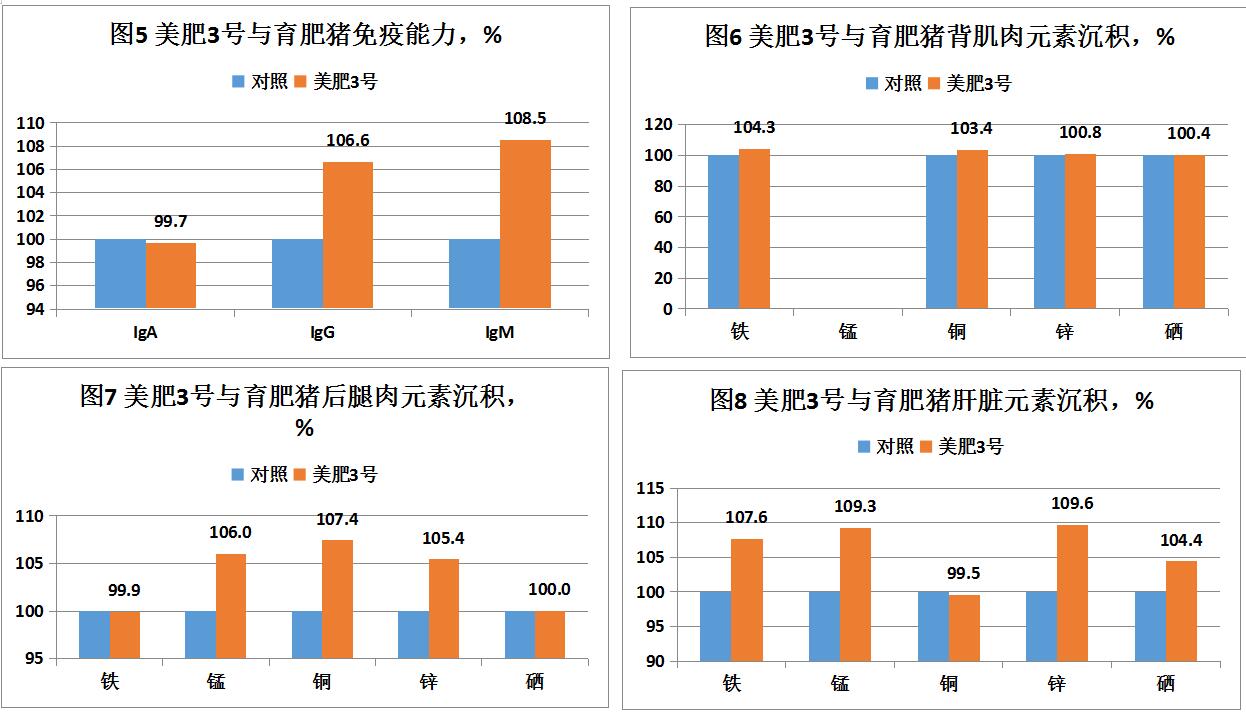
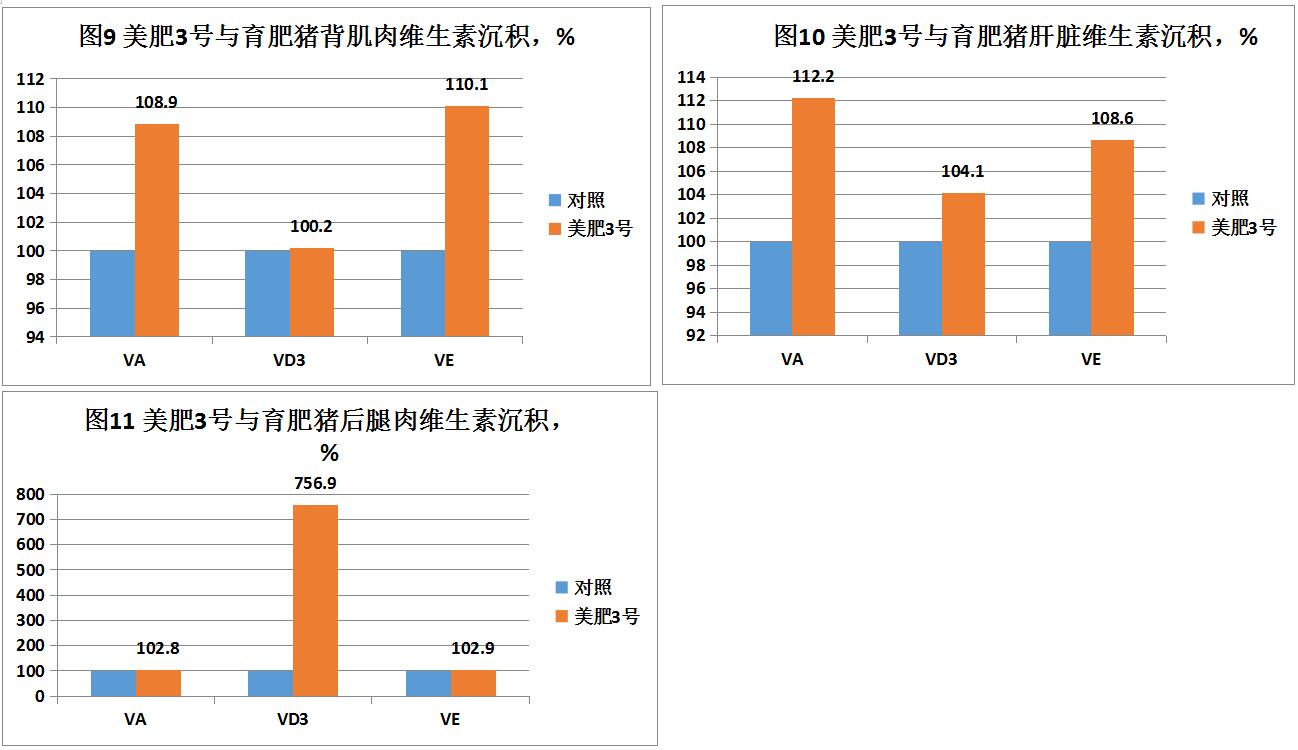
Table 9: Production Plan for Anti Antibiotic High Quality Pork with Meifei No.3 Feeding for 8 Weeks - Comparative Analysis of Meat Color at Different Times of Dorsal Muscle Storage (4 ° C, with Air)
Organization | Meifei No. 3,500 mg/kg | 24h×1 | 24h×3 | 24h×6 | 24h×9 | 24h×12 |
L Value | Compare | 50.74 | 46.29 | 43.64 | 38.96 | 41.18 |
Meifei No. 3 | 48.82 | 44.92 | 40.74 | 38.40 | 37.38 | |
SEM | 0.658 | 1.088 | 1.451 | 1.338 | 1.310 | |
p-value | 0.156 | 0.534 | 0.326 | 0.835 | 0.158 | |
a Value | Compare | 6.53 | 8.47 | 7.46 | 7.57 | 6.84 |
Meifei No. 3 | 8.21 | 6.89 | 7.66 | 7.46 | 7.04 | |
SEM | 0.252 | 0.335 | 0.343 | 0.384 | 0.378 | |
p-value | 0.002 | 0.025 | 0.773 | 0.891 | 0.192 | |
b Value | Compare | 10.56 | 11.63 | 10.37 | 9.46 | 9.96 |
Meifei No. 3 | 11.53 | 10.31 | 9.87 | 9.03 | 9.22 | |
SEM | 0.222 | 0.265 | 0.461 | 0.415 | 0.556 | |
p-value | 0.368 | 0.181 | 0.592 | 0.612 | 0.512 | |
Comprehensive rating value | Compare | 2.69 | 3.40 | 3.75 | 4.42 | 4.08 |
Meifei No. 3 | 3.03 | 3.54 | 4.17 | 4.50 | 4.64 | |
SEM | 0.093 | 0.163 | 0.211 | 0.196 | 0.181 | |
p-value | 0.082 | 0.666 | 0.324 | 0.846 | 0.137 |
Table 10: Production Plan for Anti Antibiotic High Quality Pork with Meifei No.3 Feeding for 8 Weeks - Relative Color Values of Dorsal Muscle at Different Times of Storage (4 ° C, with Air),
Organization | Meifei No. 3,500mg/kg | 24h×1 | 24h×3 | 24h×6 | 24h×9 | 24h×12 |
L Value | Compare | 100 | 100 | 100 | 100 | 100 |
Meifei No. 3 | 96.2 | 97.0 | 93.4 | 98.6 | 90.8 | |
a Value | Compare | 100 | 100 | 100 | 100 | 100 |
Meifei No. 3 | 125.9 | 81.4 | 102.7 | 98.6 | 102.9 | |
b Value | Compare | 100 | 100 | 100 | 100 | 100 |
Meifei No. 3 | 109.2 | 88.6 | 95.2 | 95.5 | 92.6 | |
Comprehensive rating value | Compare | 100 | 100 | 100 | 100 | 100 |
Meifei No. 3 | 112.5 | 104.2 | 111.3 | 101.7 | 113.6 |
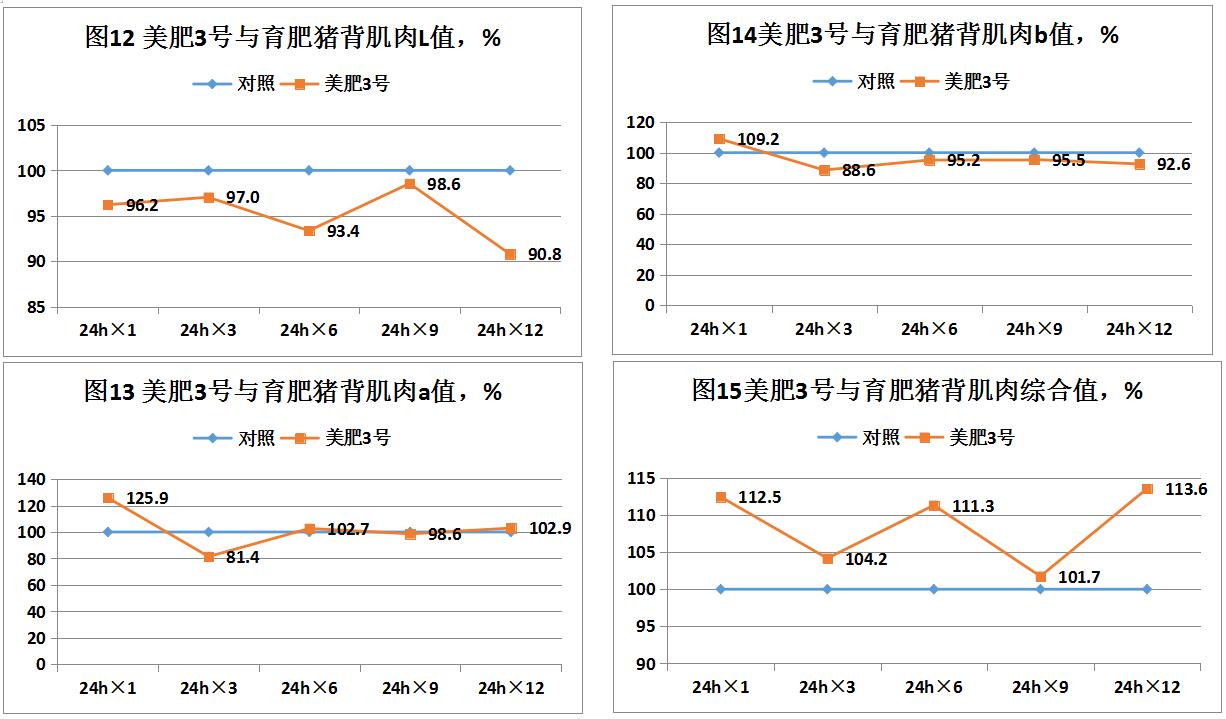
Table 11 Production Plan for Anti Antibiotic High Quality Pork of Meifei No.3 Feeding for 8 Weeks - Changes in Meat Color at Different Times of Dorsal Muscle Storage (4 ° C, with Air),%
Organization | Meifei No. 3,500 mg/kg | 24h×1 | 24h×3 | 24h×6 | 24h×9 | 24h×12 | SEM | p-value | Linear | Secondary |
L Value | Compare | 50.74 | 46.29 | 43.64 | 38.96 | 41.18 | 0.802 | <0.0001 | <0.0001 | <0.0001 |
Meifei No. 3 | 48.82 | 44.92 | 40.74 | 38.40 | 37.38 | 0.716 | <0.0001 | <0.0001 | <0.0001 | |
a Value | Compare | 6.53 | 8.47 | 7.46 | 7.57 | 6.84 | 0.236 | 0.101 | 0.879 | 0.112 |
Meifei No. 3 | 8.21 | 6.89 | 7.66 | 7.46 | 7.04 | 0.194 | 0.221 | 0.204 | 0.395 | |
b Value | Compare | 10.56 | 11.63 | 10.37 | 9.46 | 9.96 | 0.262 | 0.117 | 0.074 | 0.192 |
Meifei No. 3 | 11.53 | 10.31 | 9.87 | 9.03 | 9.22 | 0.248 | 0.016 | 0.001 | 0.003 | |
Comprehensive rating value | Compare | 2.69 | 3.40 | 3.75 | 4.42 | 4.08 | 0.116 | <0.0001 | <0.0001 | <0.0001 |
Meifei No. 3 | 3.03 | 3.54 | 4.17 | 4.50 | 4.64 | 0.104 | <0.0001 | <0.0001 | <0.0001 |
Table 12: Changes in L value and comprehensive value after 12 days of storage of fattening pig spine (4 ° C, with air) with Meifei No. 3
Item | Linear model | Slope | R² | Relative slope | |
L Value | Inorganic | y = -2.6450x + 52.096 | -2.6450 | 0.8331 | 1.00 |
Organic | y = -2.9406x + 50.873 | -2.9406 | 0.9510 | 1.11 | |
Comprehensive rating value | Inorganic | y = 0.3802x + 2.5281 | 0.3802 | 0.8149 | 1.00 |
Organic | y = 0.4176x + 2.723 | 0.4176 | 0.9488 | 1.10 | |